
Activepieces vs Agent to Agent Testing Platform
Side-by-side comparison to help you choose the right AI tool.

Activepieces
Activepieces empowers teams to create smart automations effortlessly with an open-source AI agent ecosystem, no coding.
Last updated: February 28, 2026

Agent to Agent Testing Platform
Revolutionize AI agent performance with our platform that tests chat, voice, and multimodal interactions for bias and.
Last updated: February 28, 2026
Visual Comparison
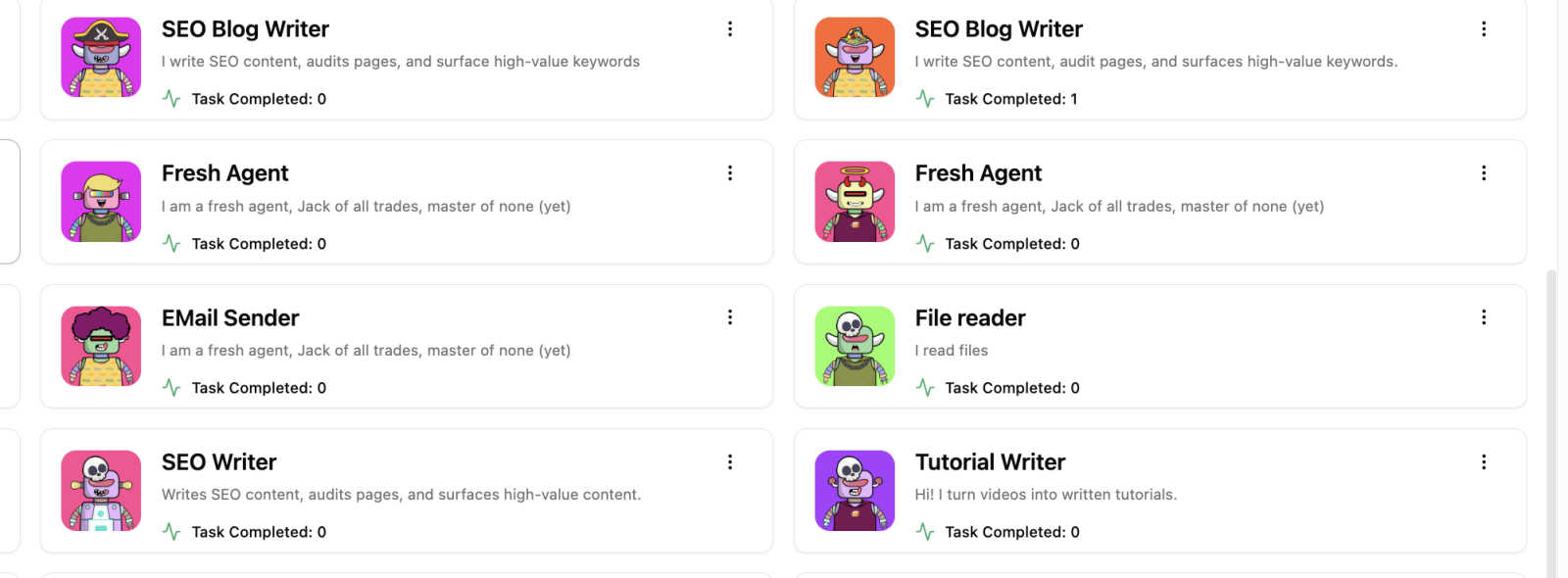
Activepieces
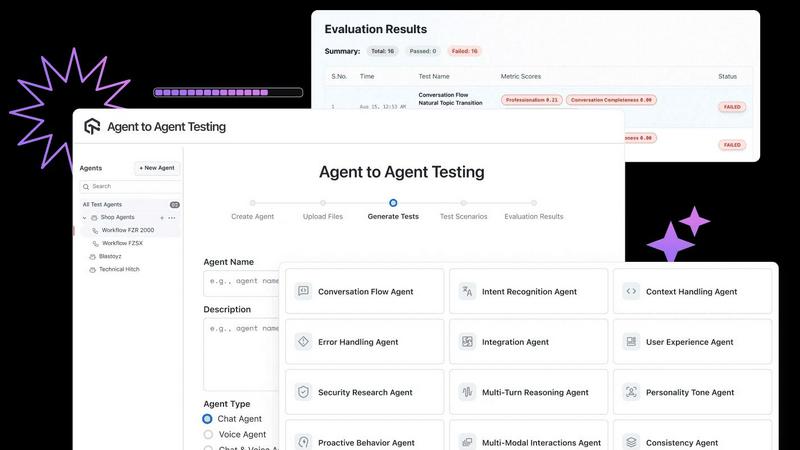
Agent to Agent Testing Platform
Feature Comparison
Activepieces
No-Code AI Agent Creation
Activepieces allows users to build sophisticated AI agents without writing a single line of code. This feature is designed to empower users across all technical backgrounds, enabling businesses to leverage AI without requiring specialized programming skills.
Extensive Tool Integrations
With over 621 integrations available, Activepieces enables seamless connectivity with various platforms. From email clients like Gmail to CRMs and communication tools, users can orchestrate their workflows efficiently by linking diverse digital tools within a unified ecosystem.
Model Context Protocols (MCPs)
Activepieces introduces groundbreaking Model Context Protocols that supercharge external large language models (LLMs) like Claude and Cursor. This feature enhances the functionality of these models, allowing them to act as powerful agents capable of executing complex tasks based on contextual understanding.
Centralized Data Management
The integrated Tables feature allows users to manage and store data centrally. This ensures that all relevant information is easily accessible and organized, enhancing the efficiency of AI agents as they execute workflows across different applications.
Agent to Agent Testing Platform
Automated Scenario Generation
This feature enables the creation of diverse test cases automatically, simulating a wide array of interactions for AI agents, including chat, voice, and hybrid scenarios. This ensures that agents are thoroughly tested across various contexts and user interactions.
True Multi-Modal Understanding
The platform allows users to define detailed requirements or upload Product Requirement Documents (PRDs) encompassing various input types, such as text, images, audio, and video. This capability ensures that the AI agent under test can accurately respond to complex, real-world scenarios.
Diverse Persona Testing
By leveraging a range of personas, the platform simulates different end-user behaviors, needs, and interactions. This ensures that AI agents can effectively cater to various user types, from international callers to digital novices, enhancing their performance across audiences.
Regression Testing with Risk Scoring
The platform offers comprehensive end-to-end regression testing, providing insights into risk scoring. This feature identifies potential areas of concern, allowing teams to prioritize critical issues and optimize testing strategies for maximum impact.
Use Cases
Activepieces
Lead Qualification Automation
Activepieces can automate the lead qualification process by deploying an AI agent that evaluates incoming leads based on predefined criteria. This not only speeds up the qualification process but also ensures that sales teams focus on high-potential leads, maximizing conversion rates.
Personalized Marketing Campaigns
Marketers can utilize Activepieces to create AI agents that send hyper-personalized communications to prospects and customers. By analyzing user behavior and preferences, these agents can deliver tailored messages, improving engagement and driving sales.
Efficient Onboarding Processes
In the human resources domain, Activepieces can streamline the onboarding process by using AI agents to guide new hires through necessary paperwork, training schedules, and introductions to team members. This enhances the onboarding experience while saving valuable HR time.
Automated Reporting
Activepieces facilitates the creation of AI agents that generate daily, weekly, or monthly reports automatically. By pulling data from various sources and summarizing insights, these agents save teams significant time and effort, allowing them to focus on strategic initiatives.
Agent to Agent Testing Platform
Quality Assurance for Chatbots
Enterprises can utilize the platform to rigorously test chatbots before deployment, ensuring they perform accurately and effectively in real-world conversations while adhering to compliance standards and user expectations.
Voice Assistant Evaluation
The platform is ideal for validating voice assistants, allowing organizations to assess their performance in diverse acoustic conditions and interactions, ensuring they deliver a seamless user experience.
Phone Caller Agent Testing
By simulating realistic phone interactions, businesses can evaluate the effectiveness and reliability of their AI-powered phone caller agents, ensuring they handle customer inquiries with professionalism and empathy.
Continuous Performance Monitoring
With autonomous testing capabilities, organizations can continuously monitor AI agents post-deployment, ensuring they maintain high performance levels and adapt to evolving user needs and scenarios.
Overview
About Activepieces
Activepieces is an innovative open-source AI Agent ecosystem designed to transform the landscape of work automation. It bridges the gap between non-technical business users and seasoned developers, enabling them to create intelligent, autonomous AI agents that can manage complex and repetitive workflows across diverse digital ecosystems. The platform's primary value proposition lies in its ability to democratize the development of sophisticated, multi-agent systems without necessitating any coding skills. In an era where agentic AI is becoming essential, Activepieces serves as a user-friendly platform that orchestrates digital workers effectively. With seamless integration capabilities to over 621 tools—including popular applications like Gmail, CRMs, and databases—users can empower agents to think, act, and collaborate efficiently. Whether it's a single agent managing data or a coordinated team of agents handling tasks like lead qualification, personalized communications, and onboarding, Activepieces offers the required infrastructure. The ecosystem is extensive, featuring integrated Tables for centralized data management, Todos for essential human approvals, and revolutionary Model Context Protocols (MCPs) that enhance external LLMs like Claude and Cursor, transforming them into actionable agents. This is the forefront of automation, paving the way for resilient, AI-driven systems that streamline operations, reduce human error, and foster scalable growth.
About Agent to Agent Testing Platform
Agent to Agent Testing Platform is a groundbreaking AI-native quality assurance framework designed specifically for validating the behavior of AI agents in real-world scenarios. As autonomous AI systems become increasingly prevalent and unpredictable, traditional quality assurance (QA) models that were developed for static software are no longer sufficient. This revolutionary platform transcends basic prompt-level evaluations by assessing full, multi-turn conversations across diverse modalities, including chat, voice, and phone interactions. It empowers enterprises to rigorously validate AI agents before they are deployed in production environments. The platform incorporates a specialized assurance layer that facilitates multi-agent test generation using over 17 unique AI agents. These agents are engineered to uncover long-tail failures, edge cases, and complex interaction patterns often overlooked by manual testing. With autonomous synthetic user testing capabilities, the platform can simulate thousands of realistic interactions at scale, ensuring robust performance checks across critical metrics such as bias, toxicity, and hallucination.
Frequently Asked Questions
Activepieces FAQ
What types of users can benefit from Activepieces?
Activepieces is designed for a wide range of users, including non-technical business operators looking to automate workflows and experienced developers seeking to create complex AI systems without needing extensive coding skills.
How does Activepieces ensure data security?
Activepieces offers enterprise-grade security features, including Single Sign-On (SSO) capabilities, advanced role-based access control, and compliance with regulations like GDPR and SOC 2 Type II, ensuring that user data is protected throughout the automation process.
Can I integrate Activepieces with my existing tools?
Yes, Activepieces boasts over 621 integrations with popular tools like Gmail, Slack, Notion, and many more. This extensive integration capability allows users to create a cohesive workflow across various applications.
What is the learning curve for using Activepieces?
Activepieces is designed to be user-friendly, with an intuitive interface that enables users to build AI agents without prior coding knowledge. The platform also provides comprehensive documentation and support resources to assist users in getting started quickly.
Agent to Agent Testing Platform FAQ
What types of AI agents can be tested using the platform?
The Agent to Agent Testing Platform supports a wide range of AI agents, including chatbots, voice assistants, and phone caller agents, across various testing scenarios.
How does the platform ensure comprehensive testing?
The platform employs automated scenario generation and diverse persona testing to create extensive test cases that simulate real-world interactions, ensuring comprehensive evaluation of AI agent performance.
Can the platform integrate with existing CI/CD pipelines?
Yes, the Agent to Agent Testing Platform seamlessly integrates with existing CI/CD frameworks, facilitating streamlined test orchestration and quick feedback loops.
What metrics can be evaluated during testing?
Key metrics include bias, toxicity, hallucination, effectiveness, accuracy, empathy, and professionalism, allowing for a thorough assessment of AI agent behavior in diverse scenarios.
Alternatives
Activepieces Alternatives
Activepieces is a groundbreaking open-source AI agent ecosystem designed to revolutionize how tasks are automated without the need for any coding. It empowers users, from business operators to developers, to create intelligent, autonomous agents that manage complex workflows across their digital landscape. This innovation is particularly appealing in a rapidly evolving technological environment, leading many users to seek alternatives for various reasons, including pricing, specific feature sets, and compatibility with existing platforms. When exploring alternatives, users should consider several key factors. These include the ease of use, the range of integrations available, pricing structures, and the level of community support. Understanding the scalability and adaptability of the alternative solutions is also crucial, especially for organizations looking to future-proof their operations in a landscape increasingly dominated by AI-driven automation.
Agent to Agent Testing Platform Alternatives
The Agent to Agent Testing Platform is an innovative AI-native quality assurance framework designed specifically to validate the behavior of AI agents across various communication modalities, including chat, voice, and phone. As enterprises increasingly adopt autonomous AI systems, the limitations of traditional QA models become evident, prompting users to seek alternatives that better accommodate their evolving needs. Common reasons for exploring alternatives include pricing constraints, specific feature requirements, and the need for compatibility with existing platforms. When selecting an alternative to the Agent to Agent Testing Platform, users should prioritize solutions that offer robust multi-agent testing capabilities, comprehensive coverage of interaction scenarios, and a focus on security and compliance. Additionally, evaluating the scalability of the platform and its ability to simulate real-world interactions can significantly impact the effectiveness of the chosen solution in ensuring quality and assurance in AI behavior.