
Crawlkit vs SERPView
Side-by-side comparison to help you choose the right AI tool.

Crawlkit
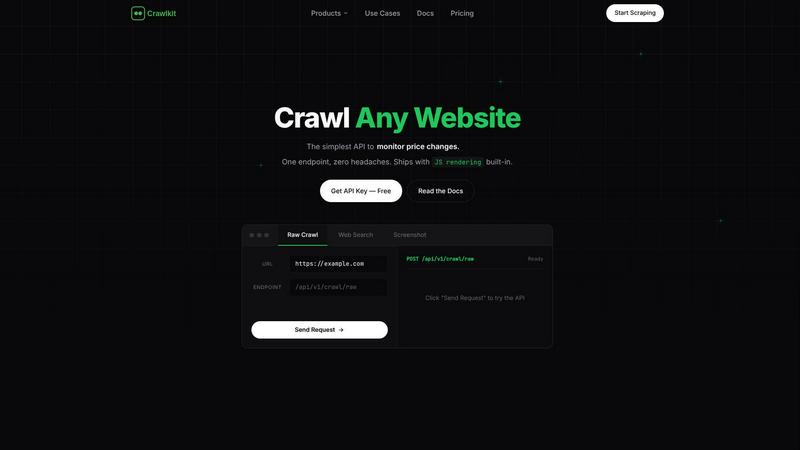
CrawlKit instantly turns any website into a structured API with one simple call.
Last updated: February 28, 2026

SERPView
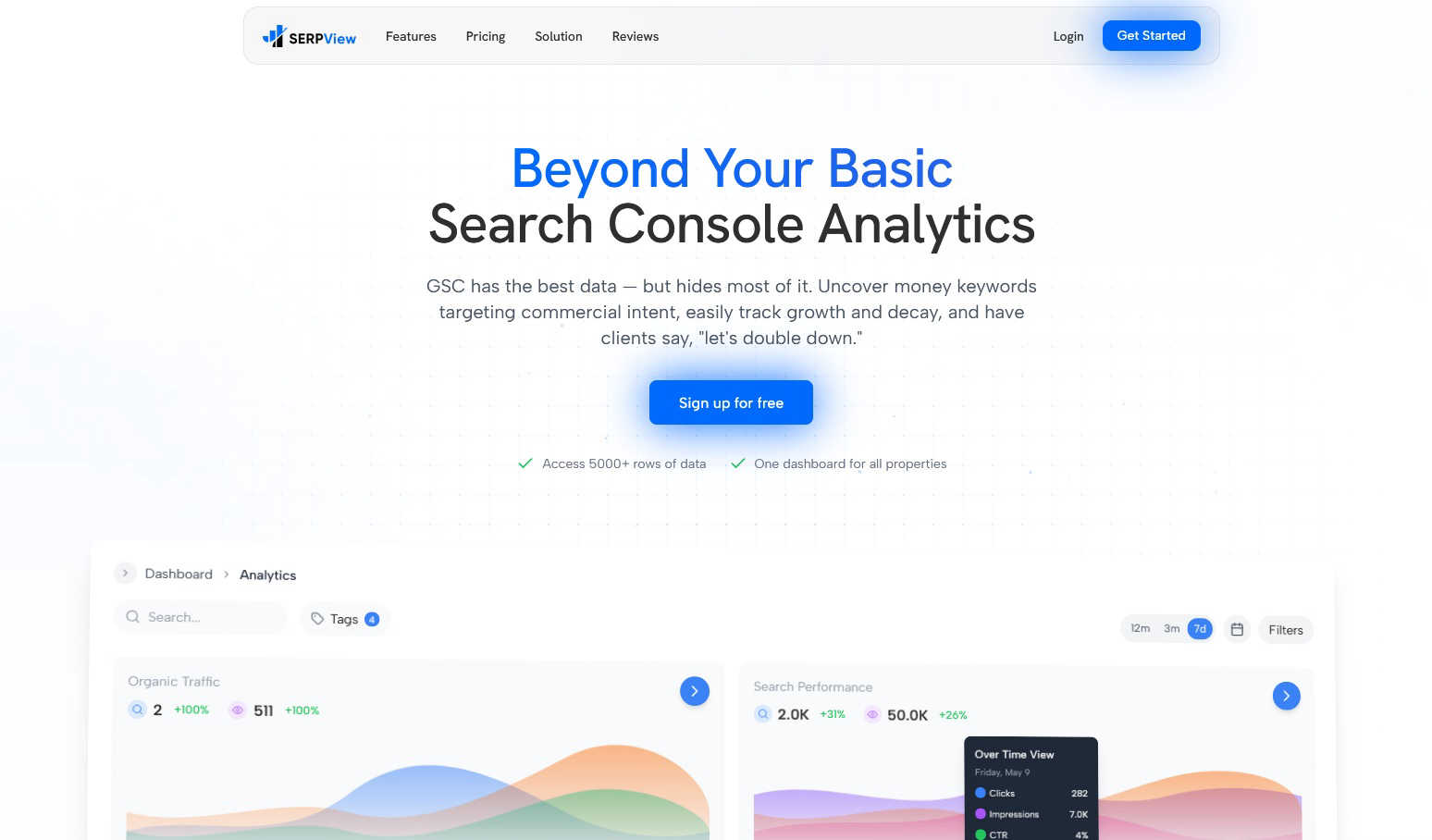
SERPView unlocks hidden Google Search Console data for advanced SEO insights and limitless analytics.
Last updated: February 28, 2026
Visual Comparison
Crawlkit
SERPView
Feature Comparison
Crawlkit
Universal Web-to-API Interface
CrawlKit provides a singular, powerful API endpoint that acts as a universal translator for the web. It seamlessly extracts structured data from any website, social platform (LinkedIn, Instagram), or app store (Play Store, App Store), eliminating the need for multiple, disparate scraping tools. This unified approach ensures consistent data formatting and simplifies integration, turning the entire internet into a queryable API with one call.
Autonomous Infrastructure Management
The platform's core intelligence lies in its fully managed backend infrastructure. It automatically handles the most challenging aspects of data extraction: rotating residential proxies to avoid IP blocks, executing JavaScript in headless browsers for dynamic content, implementing smart retry logic, and bypassing sophisticated anti-bot measures. This autonomous operation guarantees high success rates and complete data delivery without any developer overhead.
Transparent, Consumption-Based Pricing
CrawlKit operates on a clear, credit-based model where you only pay for successful requests. With no monthly commitments, no rate limits, and credits that never expire, it offers unparalleled financial flexibility. The pricing is fully transparent, with costs fixed per API endpoint and automatic refunds for failed requests, ensuring you have predictable costs and complete control over your data extraction budget.
Enterprise-Grade Reliability & Data Completeness
Engineered for mission-critical workflows, CrawlKit ensures you never receive partial or broken data. The system waits for full page loads, validates all responses, and employs robust parsing to deliver clean, structured JSON every time. This commitment to data completeness and integrity makes it a reliable source for analytics, machine learning models, and automated business processes.
SERPView
Unlimited Performance Tracking
Break free from Google's 1,000-row data prison. SERPView provides unrestricted access to over 50,000 rows of granular Search Console data, allowing for deep, comprehensive analysis of clicks, impressions, CTR, and average position across your entire site without any artificial limitations. This foundational feature ensures no critical trend or opportunity remains obscured by data sampling.
Advanced Keyword & Page Intelligence
Move beyond basic metrics to uncover strategic insights. The platform identifies high-intent "money keywords" and provides detailed tracking of position changes over time. Simultaneously, page-level analysis pinpoints your top-performing and under-optimized content, offering a dual lens to refine both keyword targeting and on-page SEO strategies for maximum impact.
Holistic Topic Cluster & Device Analytics
Gain a macroscopic view of your content ecosystem by tracking the performance of entire topic clusters instead of isolated pages. Furthermore, conduct precise mobile versus desktop performance comparisons to identify device-specific optimization opportunities and allocate resources intelligently based on where your audience engages most effectively.
Unified Multi-Property Dashboard
Eliminate the chaos of toggling between accounts. SERPView's centralized command hub allows you to connect and visualize data from all your Google Search Console properties in one intuitive interface. This creates a single source of truth for your entire domain portfolio, dramatically enhancing team coordination and reporting efficiency.
Use Cases
Crawlkit
Competitive Intelligence & Market Research
Automate the collection of competitor data from their websites, app store reviews, and social media presence. Track feature updates, pricing changes, customer sentiment, and marketing campaigns in real-time. This continuous stream of structured intelligence allows businesses to make data-driven strategic decisions and quickly adapt to market shifts.
Lead Generation & CRM Enrichment
Supercharge sales pipelines by automatically enriching lead profiles with data from LinkedIn and company websites. Extract job titles, company information, skills, and professional details to build rich, targeted lead lists. This automation turns raw contact information into actionable, contextual insights for personalized outreach.
Social Media Monitoring & Analytics
Build dashboards that track brand health, campaign performance, and competitor activity on platforms like Instagram. Automatically pull follower counts, engagement metrics, post details, and hashtag performance. Transform public social data into structured analytics for reporting, trend analysis, and growth strategy.
Product Intelligence & Review Analysis
Systematically gather and analyze customer reviews from the Apple App Store and Google Play Store. Monitor ratings, extract feature requests, and identify common pain points. This structured feedback loop is essential for product teams to prioritize development, improve user experience, and track the impact of new releases.
SERPView
Enterprise SEO Team Collaboration
Large marketing teams can leverage the unified dashboard to break down data silos. By providing a single, real-time view of performance across all properties and regions, SERPView enables seamless collaboration, aligned strategy execution, and streamlined reporting, turning disparate data into a cohesive action plan for the entire organization.
In-Depth Content Strategy Audit
Content managers and SEOs can perform exhaustive audits to revitalize their content library. By analyzing page performance and topic cluster data, they can systematically identify high-potential pages for optimization, discover content gaps, and strategically update or repurpose underperforming assets to drive sustained organic growth.
Precision Keyword Opportunity Mining
SEO specialists can use the advanced keyword analysis to drill deep into the long tail of search queries. By accessing the full dataset, they can uncover untapped commercial keywords, track ranking volatility for core terms, and build a robust, opportunity-focused keyword strategy that directly supports business and conversion goals.
Global SEO Performance Monitoring
For businesses targeting international audiences, SERPView's country and language tracking is indispensable. Marketers can monitor regional performance disparities, identify growth markets, and tailor their technical and content SEO strategies for specific locales, all from a consolidated global performance dashboard.
Overview
About Crawlkit
CrawlKit is the next-generation data extraction engine, a unified API that transforms the chaotic web into a structured, queryable database. It is engineered for developers, data scientists, and growth teams who refuse to be bottlenecked by the archaic complexities of web scraping. In the modern data-driven landscape, accessing public web data shouldn't require a PhD in proxy rotation, headless browser management, and CAPTCHA-solving. CrawlKit disrupts this paradigm by abstracting the entire data collection stack. You send a simple, standardized API request; the platform's autonomous systems handle dynamic rendering, intelligent proxy orchestration, anti-bot evasion, and precise data parsing. Whether you need raw HTML, parsed search results, visual snapshots, or professional data from fortified platforms like LinkedIn and Instagram, CrawlKit delivers through a single, resilient interface. It’s not just a tool; it's an infrastructure upgrade that shifts your focus from the labor of data collection to the leverage of data intelligence, enabling scalable, reliable, and efficient data pipelines for any project.
About SERPView
SERPView is the next-generation analytics engine, a paradigm-shifting platform engineered to liberate SEO professionals and digital marketers from the restrictive confines of Google Search Console (GSC). It represents a quantum leap in search data intelligence, transforming raw GSC metrics into a dynamic, actionable command center. Designed for the data-driven strategist, SERPView shatters the 1,000-row data barrier, granting unfettered access to over 50,000 rows of granular performance data. This unprecedented depth unveils hidden opportunities, tracks keyword evolution, and illuminates content performance with crystal clarity. Its core value proposition is the seamless unification of multiple GSC properties into a single, collaborative dashboard, enabling teams to transcend manual analysis and achieve hyper-efficient, insight-led decision-making. SERPView is not just a tool; it's the essential operating system for modern SEO, built for those who demand to see beyond the surface and harness the full, untapped potential of their search presence.
Frequently Asked Questions
Crawlkit FAQ
How does CrawlKit handle websites with anti-bot protection?
CrawlKit's autonomous infrastructure is specifically engineered to counter modern anti-bot systems. It utilizes a combination of rotating residential proxy networks, realistic browser fingerprinting, and adaptive request patterns that mimic human behavior. The system automatically manages CAPTCHAs and other challenges, ensuring a high success rate for data extraction from even the most fortified websites.
What happens if an API request fails?
CrawlKit operates on a "succeed or refund" principle. If a request fails due to timeouts, blocking, or unavailable data, the credits used for that request are automatically refunded to your account. This policy ensures you only pay for successful, complete data delivery, making cost forecasting simple and fair.
Can I request a new data source or API endpoint?
Absolutely. CrawlKit is built to evolve with user needs. The platform explicitly invites users to suggest new sources. Their team can often build custom connectors for specific websites or platforms, turning them into a standardized API endpoint for your use case and potentially for all users.
Is there a free tier to test the service?
Yes, CrawlKit offers a free starting tier that provides 100 credits upon sign-up. This allows you to test multiple API calls across different endpoints (like LinkedIn profiles, Instagram data, or app store reviews) without any financial commitment. You can explore the platform's capabilities and integrate it into a proof-of-concept before scaling up.
SERPView FAQ
How is SERPView different from Google Search Console?
SERPView is a powerful analytics layer built on top of Google Search Console data. While GSC provides the raw data feed, SERPView removes its critical limitations, such as the 1,000-row cap, lack of historical depth, and disjointed multi-property view. It transforms this data with advanced analytics, unified dashboards, and collaborative features GSC does not offer.
What data limits does SERPView have?
SERPView is engineered to overcome data limits. Its primary advantage is providing access to over 50,000 rows of Google Search Console data per report, a 50x increase over GSC's standard interface. This ensures you can perform comprehensive analysis without hitting a sampling wall, seeing a complete picture of your site's search performance.
Can I track multiple websites or properties?
Absolutely. A core function of SERPView is the consolidation of multiple GSC properties. You can connect numerous websites, domain properties, and URL-prefix properties into one centralized dashboard. This eliminates the need to switch between accounts and provides an aggregated, holistic view of your entire search ecosystem.
Is historical data from GSC imported?
Yes, upon connecting your Google Search Console account, SERPView imports and processes your available historical performance data. This allows you to immediately analyze trends over time, track the impact of past changes, and establish performance benchmarks without starting from a blank slate.
Alternatives
Crawlkit Alternatives
Crawlkit is a next-generation web data extraction platform, a quantum leap in the analytics and data category. It redefines data acquisition by abstracting the immense complexity of proxy networks, headless browsers, and anti-bot countermeasures into a single, intelligent request. This allows developers and data teams to transcend traditional scraping limitations and access a unified data stream from any web source. Even with such a revolutionary tool, the search for alternatives is a natural part of the tech ecosystem. Users may evaluate options based on specific architectural needs, granular feature requirements, or budget parameters. Some seek deeper customization of proxy geolocation, while others prioritize a particular data output format or integration framework. When evaluating any platform in this space, focus on core architectural intelligence. Seek solutions that offer not just data extraction, but cognitive resilience against blocking, seamless scalability, and a truly developer-centric API. The ideal platform acts as an autonomous data pipeline, requiring minimal oversight while delivering maximum fidelity and reliability.
SERPView Alternatives
SERPView is a revolutionary analytics platform that redefines the frontier of search data intelligence. It operates within the advanced SEO analytics and data visualization category, transforming the raw potential of Google Search Console into actionable, strategic insights. Users often explore the competitive landscape for various reasons. These can include aligning with specific budget parameters, seeking a particular integration ecosystem, or requiring a unique feature set tailored to a specialized workflow. The quest for the optimal data orchestration tool is a common step in building a high-performance tech stack. When evaluating other solutions, prioritize platforms that offer deep, unfiltered data access beyond standard limits. Look for robust visualization capabilities, collaborative features for team synergy, and a core architecture built for scalability and future-proof insights. The ideal alternative should not just report data, but catalyze strategic decisions.