
HookMesh vs qtrl.ai
Side-by-side comparison to help you choose the right AI tool.

Revolutionize your SaaS with HookMesh for seamless webhook delivery, automated retries, and a self-service customer.
Last updated: February 28, 2026

qtrl.ai
Revolutionize your QA process with qtrl.ai, the AI-powered platform that scales testing while ensuring control and.
Last updated: March 4, 2026
Visual Comparison
HookMesh
qtrl.ai
Feature Comparison
HookMesh
Reliable Delivery
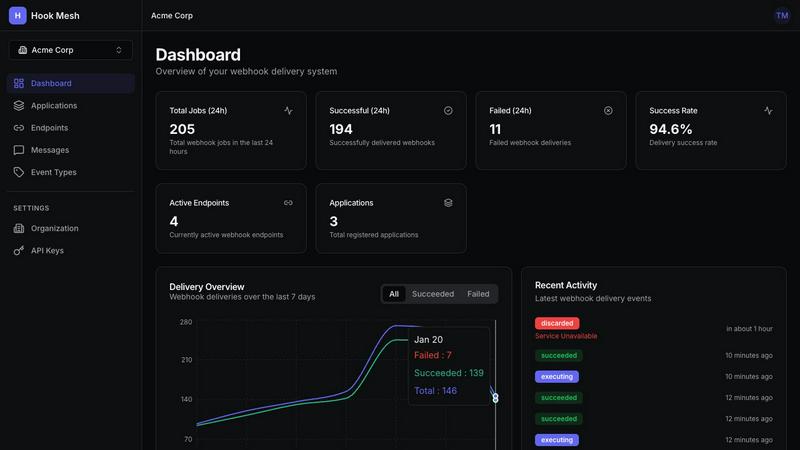
With HookMesh, businesses can rest assured that no webhook will go missing. The platform employs automatic retries that utilize exponential backoff and jitter, allowing for up to 48 hours of retry attempts. This ensures that even if a customer endpoint is temporarily down, the webhook will be delivered reliably once the endpoint is back online.
Customer Portal
The self-service customer portal is a game-changer for organizations. It features an embeddable UI that allows users to manage their own webhook endpoints easily. Customers can view detailed delivery logs, providing full request and response visibility, and can instantly replay failed deliveries with just one click, enhancing their experience and reducing downtime.
Developer Experience
Designed with developers in mind, HookMesh offers an intuitive REST API and official SDKs for JavaScript, Python, and Go. This means developers can ship webhooks in minutes using just a few lines of code. The platform’s playground feature also allows for testing and debugging webhooks before going live, ensuring a smooth rollout of new features.
Simple, Transparent Pricing
HookMesh provides straightforward pricing plans that cater to various business needs. With no per-endpoint fees and free retries, organizations can choose a plan that fits their usage without facing unexpected costs. The free tier includes 5,000 webhooks per month, making it accessible for startups and small businesses to get started without financial commitment.
qtrl.ai
Autonomous QA Agents
qtrl.ai's Autonomous QA Agents execute instructions on demand or continuously, offering unparalleled scalability across various environments. They operate strictly within the defined governance rules, ensuring real browser execution rather than relying on simulations, which enhances the reliability of test outcomes.
Enterprise-Grade Test Management
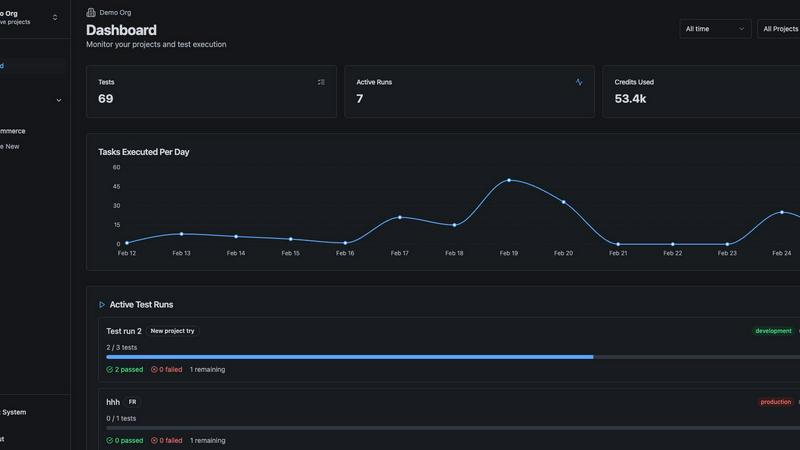
The platform provides a centralized method for managing test cases, plans, and runs, ensuring full traceability and comprehensive audit trails. This feature supports both manual and automated workflows, facilitating compliance and auditability, which is essential for organizations that prioritize governance.
Progressive Automation
With qtrl.ai, teams can initiate their QA processes with human-written instructions and gradually advance to AI-generated tests. The platform intelligently suggests new tests based on coverage gaps, allowing teams to review, approve, and refine test scenarios at every step, ensuring quality remains paramount.
Adaptive Memory
qtrl.ai boasts an Adaptive Memory feature that builds a living knowledge base of the application. It learns from test execution, exploration, and issues, enabling smarter, context-aware test generation that becomes increasingly effective with each interaction, significantly boosting testing efficiency over time.
Use Cases
HookMesh
E-commerce Notifications
In the fast-paced world of e-commerce, timely notifications are crucial. HookMesh enables e-commerce platforms to send instant order updates, payment confirmations, and shipping notifications to customers without the risk of losing critical information, enhancing customer satisfaction and trust.
SaaS Application Integrations
For SaaS applications, integrating with third-party services is vital. HookMesh streamlines this process by ensuring that webhook events, such as user sign-ups or billing updates, are delivered consistently. This reliability allows SaaS providers to maintain seamless integrations with their partners and improve overall user experience.
Real-time Analytics
Data-driven decisions are essential for modern businesses. HookMesh empowers analytics platforms to deliver real-time data updates to clients. By ensuring the reliability of webhook events, businesses can trust that their customers receive timely insights, leading to more informed decision-making.
Automated Customer Support
In customer support applications, automated responses and ticket updates are critical. HookMesh facilitates the reliable delivery of these webhooks, ensuring that customers receive prompt notifications about ticket statuses or resolutions, thereby improving customer engagement and satisfaction.
qtrl.ai
Product-Led Engineering Teams
For product-led engineering teams, qtrl.ai streamlines the quality assurance process by integrating testing directly within the development workflow. This ensures that product features are rigorously tested, facilitating faster releases while maintaining high standards of quality.
QA Teams Scaling Beyond Manual Testing
As QA teams outgrow manual testing methods, qtrl.ai provides the tools necessary to scale operations efficiently. The platform's automation capabilities allow teams to transition smoothly from manual processes to intelligent automation, increasing productivity and reducing time to market.
Companies Modernizing Legacy QA Workflows
Organizations looking to modernize outdated QA workflows can leverage qtrl.ai to revamp their testing strategies. By incorporating advanced test management and AI automation, companies can enhance their testing efficacy, reduce costs, and ensure compliance with modern standards.
Enterprises Requiring Governance and Traceability
For enterprises that mandate strict governance and traceability, qtrl.ai delivers a robust solution that provides comprehensive visibility into testing processes. With features designed for compliance, organizations can ensure that every step of the QA process is documented and accountable.
Overview
About HookMesh
HookMesh is a revolutionary platform designed to transform the way businesses handle webhook delivery for modern SaaS products. By addressing the intricate challenges associated with in-house webhook management, HookMesh provides a seamless and efficient solution that allows organizations to focus on their core offerings. The platform empowers developers and product teams to effortlessly integrate reliable webhook delivery, minimizing the complexities of retry logic, circuit breakers, and debugging delivery issues. With battle-tested infrastructure, HookMesh guarantees dependable delivery through features like automatic retries, exponential backoff, and idempotency keys. Its self-service portal enhances the customer experience by simplifying endpoint management, offering visibility into delivery logs, and enabling one-click replay of failed webhooks. HookMesh is the ideal choice for organizations seeking to streamline their webhook strategy, ensuring consistent and reliable communication with their customers.
About qtrl.ai
qtrl.ai is a cutting-edge quality assurance platform engineered for modern software teams seeking to enhance their QA processes without relinquishing governance or oversight. By seamlessly integrating enterprise-grade test management with advanced AI automation, qtrl.ai creates a centralized hub that empowers teams to organize their test cases, plan test runs, and trace requirements back to coverage. This structured foundation is crucial for tracking quality metrics through real-time dashboards, providing visibility into testing progress, pass rates, and potential risks, which is indispensable for engineering leads and QA managers. What sets qtrl.ai apart is its innovative AI layer that introduces intelligent automation gradually, allowing teams to begin with manual test management before transitioning to fully autonomous agents. These agents can generate UI tests from natural language descriptions, adapt them as applications evolve, and execute tests at scale across diverse browsers and environments. qtrl.ai is ideal for product-led engineering teams, QA groups transitioning from manual testing, organizations modernizing legacy workflows, and enterprises requiring stringent compliance. Ultimately, qtrl.ai bridges the gap between the slow pace of manual testing and the complexities of traditional automation, paving the way for a faster, more intelligent approach to quality assurance.
Frequently Asked Questions
HookMesh FAQ
What is HookMesh and how does it work?
HookMesh is a webhook delivery platform that simplifies the management of webhooks for SaaS products. It works by allowing businesses to send events via its API or SDKs, managing the delivery with automatic retries and circuit breakers, while providing customers with tools to manage their own endpoints.
How does HookMesh ensure reliable delivery?
HookMesh employs automatic retry mechanisms with exponential backoff and jitter, allowing for retries over a period of up to 48 hours. Additionally, it uses circuit breakers to automatically disable failing endpoints and re-enable them once they recover.
What programming languages does HookMesh support?
HookMesh offers official SDKs for JavaScript, Python, and Go, making it easy for developers to integrate webhook delivery into their applications. The REST API also provides full programmatic access to all features.
Is there a free tier available for HookMesh?
Yes, HookMesh offers a free tier that includes 5,000 webhooks per month, allowing businesses to get started without needing a credit card. This tier includes all core features, making it accessible for startups and small businesses.
qtrl.ai FAQ
What makes qtrl.ai different from traditional QA platforms?
qtrl.ai differentiates itself by combining enterprise-grade test management with progressive AI automation, allowing teams to scale their quality assurance efforts without sacrificing oversight or control.
Can qtrl.ai integrate with existing tools?
Yes, qtrl.ai is designed to seamlessly integrate with your existing tools and workflows, ensuring a smooth transition and enhanced collaboration across your development and QA teams.
How does the Adaptive Memory feature work?
The Adaptive Memory feature builds a living knowledge base of your application by learning from exploration, test execution, and issues. This enables qtrl.ai to generate smarter, context-aware tests that improve over time.
Is qtrl.ai suitable for small teams?
Absolutely! qtrl.ai is designed to scale with your team, making it suitable for small teams looking to enhance their QA processes as well as larger enterprises requiring comprehensive governance and compliance features.
Alternatives
HookMesh Alternatives
HookMesh is a cutting-edge solution positioned at the forefront of webhook management for SaaS products. It alleviates the burdens associated with in-house webhook development, offering features like automatic retries, debugging tools, and a self-service customer portal that enhances user experience. Despite its innovative offerings, users often seek alternatives due to varying factors such as pricing structures, specific feature requirements, or compatibility with their existing platforms. When searching for an alternative to HookMesh, it's essential to consider reliability, user experience, and the level of customer support provided. Look for solutions that offer robust delivery mechanisms, comprehensive logging capabilities, and seamless integration options to ensure that your webhook strategy remains efficient and effective.
qtrl.ai Alternatives
qtrl.ai is a cutting-edge quality assurance platform that empowers software teams to elevate their testing processes through intelligent automation while maintaining stringent control and governance. As part of the automation and Dev tools landscape, qtrl.ai integrates advanced AI capabilities with robust test management features, creating a centralized hub for organizing test cases, planning test runs, and tracking quality metrics in real-time. Users often seek alternatives to qtrl.ai due to various factors such as pricing structures, specific feature sets, and unique platform requirements that may not be addressed by qtrl.ai. When considering alternatives, it’s essential to evaluate the scalability of the solution, the ease of integration with existing workflows, the flexibility of automation options, and the level of support offered to ensure it aligns with your team’s quality assurance goals.