
Karolium vs Miget
Side-by-side comparison to help you choose the right AI tool.

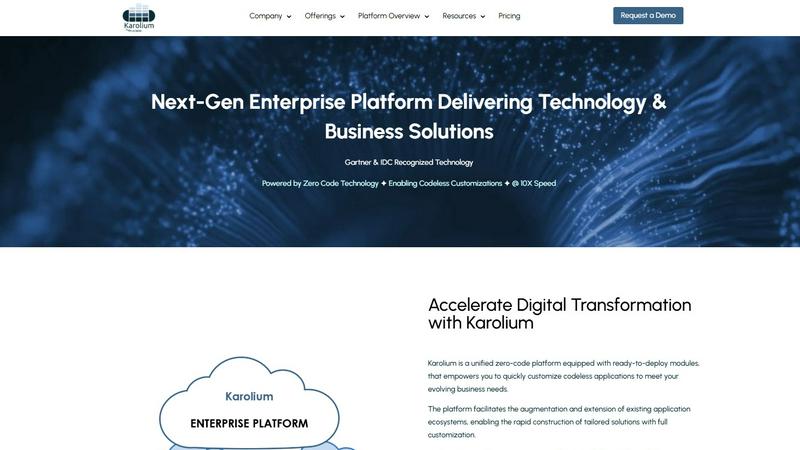
Karolium is the zero-code enterprise platform that builds and integrates AI applications at revolutionary speed.
Last updated: February 28, 2026

Miget
Deploy unlimited services on one flat-rate plan.
Visual Comparison
Karolium
Miget
Overview
About Karolium
Karolium is a next-generation enterprise intelligence platform, a unified operating system engineered for the future-proof business. It represents a paradigm shift in digital transformation by converging zero-code agility with powerful, built-in artificial intelligence into a single, cohesive environment. Designed for forward-thinking enterprises, Karolium empowers organizations to break free from the constraints of rigid, off-the-shelf software and the slow, costly cycles of traditional development. Its core value proposition is delivering 10x speed in application development and ecosystem augmentation by providing a codeless canvas for full customization alongside a suite of pre-composed, ready-to-deploy value chain modules. More than just an automation tool, Karolium seamlessly infuses predictive and prescriptive AI directly into business workflows, enabling superior, intelligence-driven decision-making. As a holistic PaaS-driven SaaS platform, it combines iPaaS, aPaaS, oPaaS, and AIPaaS capabilities to help businesses rapidly compose, customize, and deploy sophisticated, intelligent applications—all without writing a single line of code.
About Miget
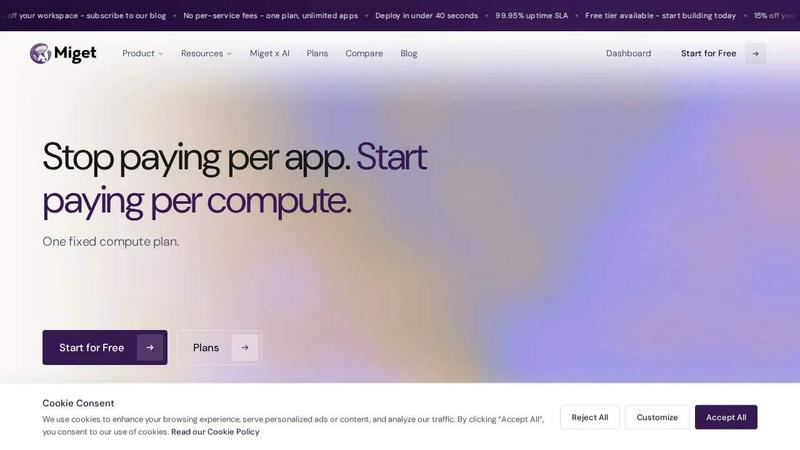
Miget – Stop paying per app. Start paying per compute.
Traditional PaaS platforms charge you for every app, database, and worker separately. Miget flips that model: pick a fixed compute plan, then deploy as many services as you want inside it.
- Unlimited apps, databases, and background workers per plan
- No per-service billing surprises
- Built on Kubernetes with full isolation between tenants
- Deploy from Git, GitHub, Registry with zero-config builds
- Managed PostgreSQL, Redis, and more
- Custom domains with automatic TLS
Whether you're running a single side project or a full production stack, you only pay for the compute you reserve—not the number of things you run on it.