
Gaffa vs qtrl.ai
Side-by-side comparison to help you choose the right AI tool.

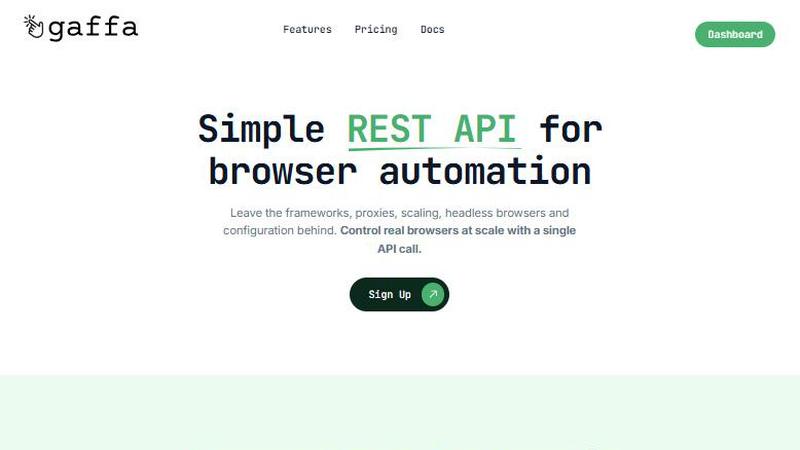
Gaffa's revolutionary API automates real browsers at scale with a single call.
Last updated: February 28, 2026

qtrl.ai
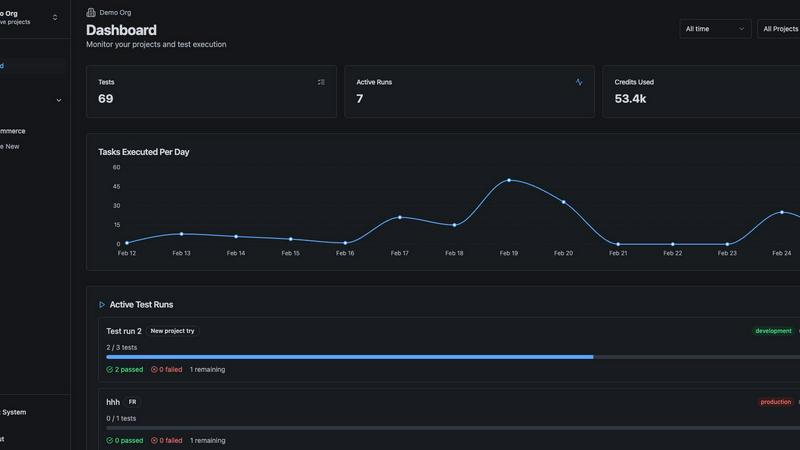
Revolutionize your QA process with qtrl.ai, the AI-powered platform that scales testing while ensuring control and.
Last updated: March 4, 2026
Visual Comparison
Gaffa
qtrl.ai
Feature Comparison
Gaffa
Simple REST API Abstraction
Gaffa's foundational feature is its powerful REST API that abstracts away the complexities of browser automation frameworks like Playwright, Selenium, and Puppeteer. With a single API call, you can command real browsers at scale, leaving the headaches of framework configuration, driver management, and script maintenance behind. This paradigm shift allows developers to integrate sophisticated web interaction and data extraction capabilities directly into their applications without becoming experts in low-level browser automation protocols.
Real Browser Execution & JavaScript Rendering
Unlike basic HTTP clients or headless browsers with detection quirks, Gaffa executes commands on genuine, fully-fledged browsers. This ensures perfect JavaScript rendering by default, allowing you to interact with and scrape data from the most modern, dynamic web applications (SPAs) exactly as a human user would. This capability is critical for accessing data behind complex client-side logic and evading anti-bot systems that fingerprint headless environments.
Integrated Proxy Network & Global Scaling
Gaffa seamlessly integrates with a managed network of residential proxies, providing fast and reliable access from geographic locations across the globe. You simply specify your target location, and Gaffa handles the rest—no need to source, rotate, or manage proxy IPs yourself. This built-in infrastructure, combined with automatic scaling, means you can throw any volume of work at the platform without worrying about IP bans, rate limits, or scaling distributed systems.
AI-Ready Data Processing & Full Observability
Gaffa goes beyond returning raw HTML. It can intelligently process page data into simplified HTML, clean markdown optimized for Large Language Model (LLM) ingestion, or even save self-contained offline versions of pages. Coupled with full session recording and observability tools, you get complete transparency into every automation. You can watch exactly what happened, debug issues visually, and receive data in the most usable format for your downstream AI models and analytics pipelines.
qtrl.ai
Autonomous QA Agents
qtrl.ai's Autonomous QA Agents execute instructions on demand or continuously, offering unparalleled scalability across various environments. They operate strictly within the defined governance rules, ensuring real browser execution rather than relying on simulations, which enhances the reliability of test outcomes.
Enterprise-Grade Test Management
The platform provides a centralized method for managing test cases, plans, and runs, ensuring full traceability and comprehensive audit trails. This feature supports both manual and automated workflows, facilitating compliance and auditability, which is essential for organizations that prioritize governance.
Progressive Automation
With qtrl.ai, teams can initiate their QA processes with human-written instructions and gradually advance to AI-generated tests. The platform intelligently suggests new tests based on coverage gaps, allowing teams to review, approve, and refine test scenarios at every step, ensuring quality remains paramount.
Adaptive Memory
qtrl.ai boasts an Adaptive Memory feature that builds a living knowledge base of the application. It learns from test execution, exploration, and issues, enabling smarter, context-aware test generation that becomes increasingly effective with each interaction, significantly boosting testing efficiency over time.
Use Cases
Gaffa
Building AI Training Datasets
Startups and AI research labs require massive, high-quality, and current datasets to train and fine-tune machine learning models. Gaffa enables the automated, large-scale collection of text, image, and structured data from diverse public web sources. Its ability to render JavaScript and process data into clean formats like markdown makes it indispensable for creating the foundational datasets that power the next generation of AI applications.
Competitive Intelligence & Market Research
Market intelligence firms and business analysts use Gaffa to autonomously monitor competitors' websites, track pricing fluctuations, analyze product catalogs, and gather sentiment from reviews and forums. The platform's reliability at scale and geographic proxy capabilities allow for continuous, global market surveillance, turning the public web into a real-time strategic dashboard for data-driven decision-making.
E-Commerce Price & Inventory Monitoring
E-commerce businesses and aggregators leverage Gaffa to track competitor pricing, monitor stock levels, and scrape product details across thousands of SKUs. By automating these tasks with human-like browsing patterns, they can dynamically adjust their own pricing strategies, identify market gaps, and ensure their product feeds are always up-to-date, all without triggering anti-scraping defenses.
Academic Research & Data Journalism
Researchers and journalists often need to collect data from numerous public websites, government portals, or social media platforms for longitudinal studies or investigative reporting. Gaffa democratizes this access, allowing them to design precise data collection automations without needing a team of software engineers. It ensures the data is collected consistently, ethically at scale, and is ready for immediate analysis.
qtrl.ai
Product-Led Engineering Teams
For product-led engineering teams, qtrl.ai streamlines the quality assurance process by integrating testing directly within the development workflow. This ensures that product features are rigorously tested, facilitating faster releases while maintaining high standards of quality.
QA Teams Scaling Beyond Manual Testing
As QA teams outgrow manual testing methods, qtrl.ai provides the tools necessary to scale operations efficiently. The platform's automation capabilities allow teams to transition smoothly from manual processes to intelligent automation, increasing productivity and reducing time to market.
Companies Modernizing Legacy QA Workflows
Organizations looking to modernize outdated QA workflows can leverage qtrl.ai to revamp their testing strategies. By incorporating advanced test management and AI automation, companies can enhance their testing efficacy, reduce costs, and ensure compliance with modern standards.
Enterprises Requiring Governance and Traceability
For enterprises that mandate strict governance and traceability, qtrl.ai delivers a robust solution that provides comprehensive visibility into testing processes. With features designed for compliance, organizations can ensure that every step of the QA process is documented and accountable.
Overview
About Gaffa
Gaffa is the autonomous data acquisition engine for the AI era, a revolutionary API-first platform that surgically removes the immense technical burden of web data extraction. It represents a quantum leap beyond traditional scraping tools, providing a single, elegant REST API that replaces the need to build and maintain complex, scalable infrastructure involving headless browsers, proxy networks, and CAPTCHA-solving services. Designed for developers, data scientists, and businesses, Gaffa delivers profound simplicity through immense power. It handles the entire pipeline, from mimicking human-like browsing behaviors and rendering JavaScript-heavy Single Page Applications (SPAs) to processing raw HTML into AI-ready structured formats like JSON or clean markdown. Whether you're a startup building foundational AI training datasets, a market intelligence firm tracking global trends, an e-commerce analyst monitoring competitors, or an academic researcher gathering information, Gaffa provides reliable, large-scale access to web data. Its core value proposition is clear: focus purely on leveraging data, not fighting for it in a digital landscape fortified with increasingly sophisticated anti-bot defenses.
About qtrl.ai
qtrl.ai is a cutting-edge quality assurance platform engineered for modern software teams seeking to enhance their QA processes without relinquishing governance or oversight. By seamlessly integrating enterprise-grade test management with advanced AI automation, qtrl.ai creates a centralized hub that empowers teams to organize their test cases, plan test runs, and trace requirements back to coverage. This structured foundation is crucial for tracking quality metrics through real-time dashboards, providing visibility into testing progress, pass rates, and potential risks, which is indispensable for engineering leads and QA managers. What sets qtrl.ai apart is its innovative AI layer that introduces intelligent automation gradually, allowing teams to begin with manual test management before transitioning to fully autonomous agents. These agents can generate UI tests from natural language descriptions, adapt them as applications evolve, and execute tests at scale across diverse browsers and environments. qtrl.ai is ideal for product-led engineering teams, QA groups transitioning from manual testing, organizations modernizing legacy workflows, and enterprises requiring stringent compliance. Ultimately, qtrl.ai bridges the gap between the slow pace of manual testing and the complexities of traditional automation, paving the way for a faster, more intelligent approach to quality assurance.
Frequently Asked Questions
Gaffa FAQ
What is a credit and how is it calculated?
A credit is Gaffa's unit of consumption for its browser automation service. It is calculated based on two primary factors: execution time and proxy usage. Browser runtime is billed at 1 credit per 30 seconds of request execution (doubled to 2 credits if screen recording is enabled). Additionally, any request using a residential proxy incurs a bandwidth charge of 1500 credits per 1GB of data transferred. This model aligns cost directly with actual resource usage.
Does Gaffa offer a free trial?
Yes, Gaffa provides a fully-featured free tier that allows you to experiment with the complete API. You can sign up and immediately begin building and testing automations on Gaffa's dedicated demo site (demo.gaffa.dev). This sandbox environment requires no credit card and lets you validate the platform's capabilities before upgrading to a paid plan for use on the live, open internet.
What is Gaffa's refund policy?
Gaffa is happy to offer a refund upon request, provided the refund is asked for within the current billing month and before any credits from that month's allowance have been consumed. This policy ensures fairness and allows users to confidently evaluate the service for their specific use case without financial risk.
Do unused credits roll over to the next month?
No, credits do not roll over from month to month. The credit allowances included in your monthly subscription plan (Starter, Startup, Growth) are reset at the start of each new billing cycle. Any unused credits from the previous period are forfeited, so it's optimal to plan your automation workload within your monthly credit allocation.
qtrl.ai FAQ
What makes qtrl.ai different from traditional QA platforms?
qtrl.ai differentiates itself by combining enterprise-grade test management with progressive AI automation, allowing teams to scale their quality assurance efforts without sacrificing oversight or control.
Can qtrl.ai integrate with existing tools?
Yes, qtrl.ai is designed to seamlessly integrate with your existing tools and workflows, ensuring a smooth transition and enhanced collaboration across your development and QA teams.
How does the Adaptive Memory feature work?
The Adaptive Memory feature builds a living knowledge base of your application by learning from exploration, test execution, and issues. This enables qtrl.ai to generate smarter, context-aware tests that improve over time.
Is qtrl.ai suitable for small teams?
Absolutely! qtrl.ai is designed to scale with your team, making it suitable for small teams looking to enhance their QA processes as well as larger enterprises requiring comprehensive governance and compliance features.
Alternatives
Gaffa Alternatives
Gaffa is an autonomous data acquisition engine, a revolutionary API-first platform in the browser automation and web data extraction category. It surgically removes the immense technical burden of building scalable scraping infrastructure, allowing users to focus purely on leveraging data through a single, powerful API call. Users may explore alternatives for various reasons, including specific budget constraints, the need for different feature integrations, or platform compatibility requirements beyond a pure API model. Some may seek more granular control over the underlying infrastructure or have use cases that demand specialized tooling. When evaluating an alternative, consider the core pillars of modern data acquisition: scalability against anti-bot defenses, reliability in rendering JavaScript, the simplicity of the integration model, and the ability to output AI-ready structured data. The goal is to find a solution that balances raw power with operational simplicity, minimizing the fight for data.
qtrl.ai Alternatives
qtrl.ai is a cutting-edge quality assurance platform that empowers software teams to elevate their testing processes through intelligent automation while maintaining stringent control and governance. As part of the automation and Dev tools landscape, qtrl.ai integrates advanced AI capabilities with robust test management features, creating a centralized hub for organizing test cases, planning test runs, and tracking quality metrics in real-time. Users often seek alternatives to qtrl.ai due to various factors such as pricing structures, specific feature sets, and unique platform requirements that may not be addressed by qtrl.ai. When considering alternatives, it’s essential to evaluate the scalability of the solution, the ease of integration with existing workflows, the flexibility of automation options, and the level of support offered to ensure it aligns with your team’s quality assurance goals.